


AVEYA Teeth Whitening Strips
AVEYA Teeth Whitening Strips
BUNDLE & SAVE
Couldn't load pickup availability
-
Ordered
- - -
Order Ready
- - -
Delivered

AVEYA Teeth Whitening Strips


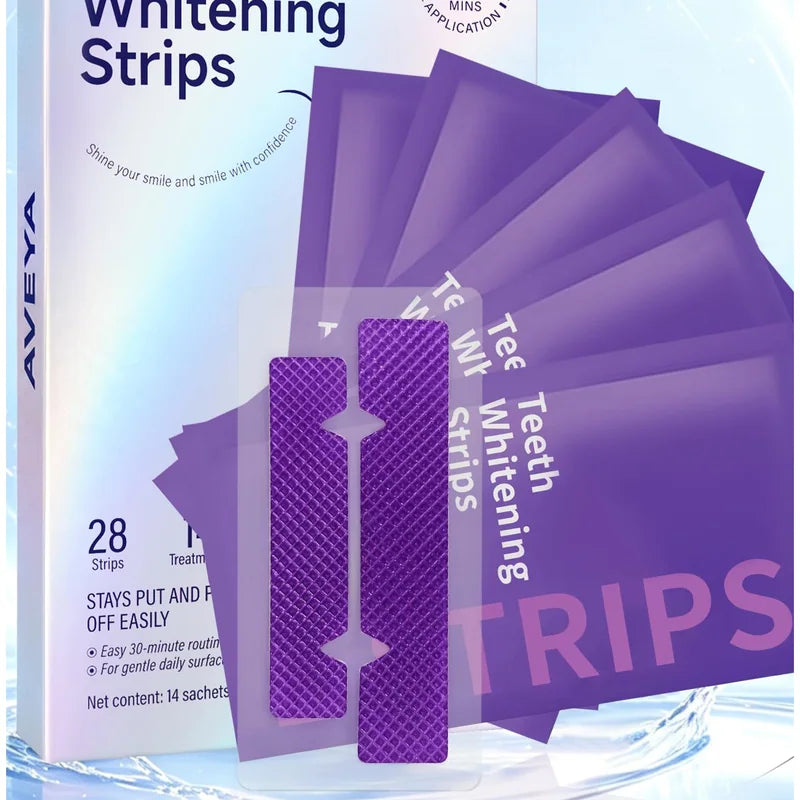
What the strips are
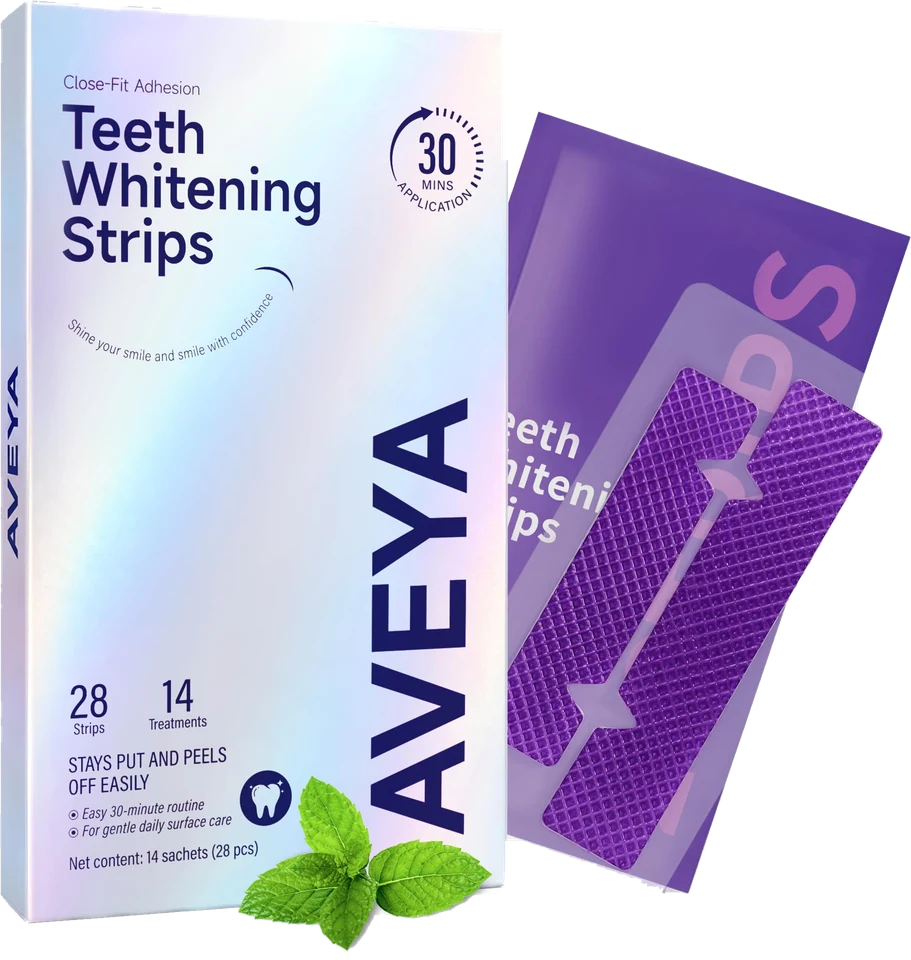
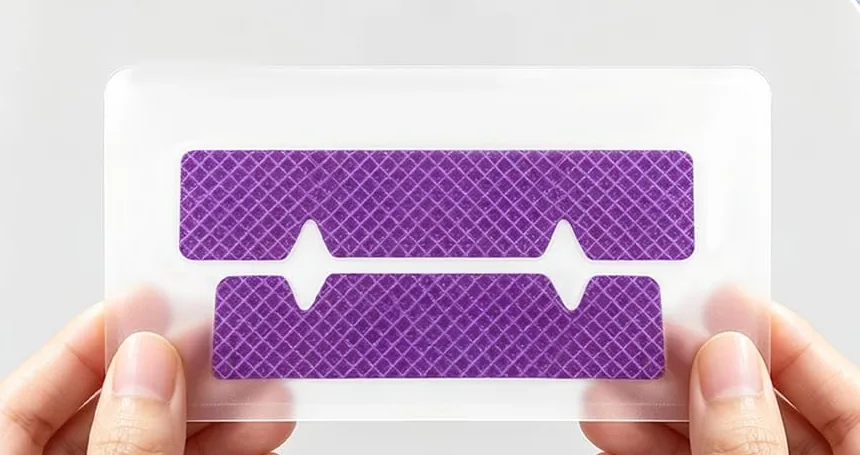
Each sachet holds two strips, one for the upper teeth and one for the lower. A session is 30 minutes. The small box has 14 sachets and the large one has 28, so the boxes count 14 and 28 sessions.
The whitening agent is PAP, short for phthalimidoperoxycaproic acid. The formula has no hydrogen peroxide and no carbamide peroxide, the two bleaching ingredients the American Dental Association describes in most whitening strips. Hydroxyapatite, sodium phytate, the enzymes papain and bromelain, and menthol are also named on the pack.
The strips are meant for surface stains: the kind coffee, tea, red wine and smoking leave on enamel.
- One session
- 2 strips, 30 minutes
- Sessions in a box
- 14 or 28
- Whitening agent
- PAP, peroxide-free
- Flavor
- Mint
- Strip color
- Purple
- On sale since
- August 1, 2026
Know before you buy
Strips work on natural enamel. Crowns, veneers and fillings keep their color, so a smile with restorations can end up uneven. The strips reached buyers in August 2026 and have few reviews so far. With gum disease, cavities or braces, ask a dentist before any whitening.
How to use the strips
-
Peel the two strips from the backing.
-
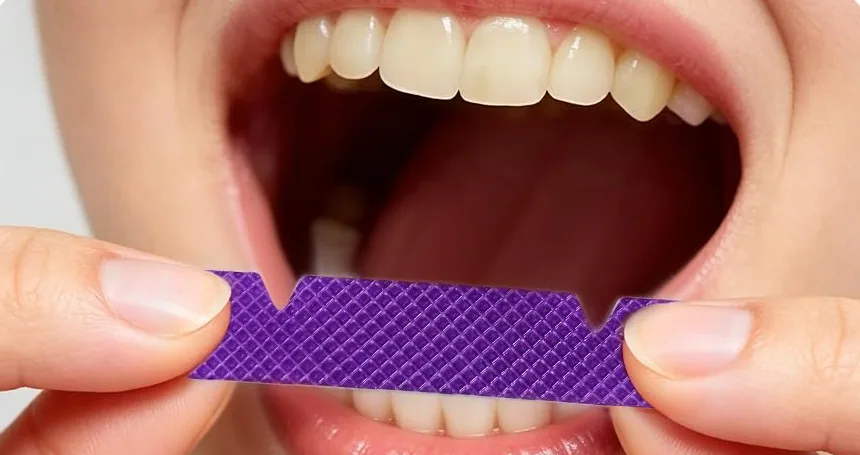
Press one onto the upper teeth and one onto the lower teeth.
-
Keep them on for 30 minutes.
-
Remove, then rinse with water or brush.
The rhythm from the product description: once a day for four days in a row, then once a week.
How long one pack lasts
A routine is easier to keep when you know the day the pack runs out. By the numbers on the packs: each sachet holds two strips, one for the upper teeth and one for the lower, and each session runs 30 minutes.
The strips follow their own rhythm: once a day for the first four days, then once a week.
-
 Smile 14 sessions28 strips, 14 treatments: 4 daily, then 10 weekly
-
 Smile 28 sessions56 strips, 28 treatments: 4 daily, then 24 weekly
-
Session 30 minTwo strips, one upper and one lower, per session

Teeth Whitening Strips: both boxes and what a session costs
| Box | Price | Price of one session | Pick |
|---|---|---|---|
| 28 strips, 14 treatments | $29.99 | $2.14 | |
| 56 strips, 28 treatments | $44.99 | $1.61 |
What the pack names
The pack names six ingredients and three it leaves out. The complete list is on the box you receive.
- PAP
- Hydroxyapatite
- Sodium Phytate
- Papain
- Bromelain
- Menthol
Not in the formula: hydrogen peroxide, carbamide peroxide and sodium lauryl sulfate.
Before you start
- Whitening works on natural teeth, not on crowns, veneers or fillings.
- Temporary tooth sensitivity and gum irritation are the most common side effects of whitening in general.
- Keep each session to the 30 minutes printed on the box.
- Stop if your teeth or gums start to hurt, and ask a dentist.
Whitening is cosmetic. The American Dental Association states that only natural teeth can be whitened, and that temporary tooth sensitivity and gum inflammation are the most common side effects. See a dentist first if you have untreated cavities, gum disease or restorations on your front teeth.
Sources
- American Dental Association, Whitening (oral health topic) , read 7 October 2026
14 or 28 treatments: which box of AVEYA Teeth Whitening Strips should I pick?
Take the box of 14 treatments for a first course: it covers the 4 daily sessions and 10 weekly ones. Take the box of 28 if two people share it or the strips already suit you: a session drops from $2.14 to $1.61.
| 14 treatments | 28 treatments | |
|---|---|---|
| In the box | 28 strips, 14 treatments | 56 strips, 28 treatments |
| Price | $29.99 | $44.99 |
| Price of one session | $2.14 | $1.61 |
| Covers | 4 daily sessions, then 10 weekly ones | 4 daily sessions, then 24 weekly ones |
PAP strips, peroxide strips or whitening toothpaste: which to pick?
Teeth Whitening Strips are the peroxide-free route: 30 minutes a session, from $1.61 a session. Peroxide strips use the bleaching ingredients dentists use most, and a whitening toothpaste scrubs surface stains off.
| AVEYA PAP strips | Peroxide strips | Whitening toothpaste | |
|---|---|---|---|
| Whitening agent | PAP, with 0 peroxide | Hydrogen or carbamide peroxide | Abrasives, sometimes low peroxide |
| Works on | Surface stains, by the wording on the pack | Stains on and inside the tooth | Surface stains |
| How it works | Two strips on the teeth for 30 minutes | A chemical reaction that changes the tooth's color | Mechanical removal while brushing |
| Better choice when | Peroxide has left your teeth sensitive before | You want the ingredients dentists use most | Stains are light and you want no extra step |
Sources
- American Dental Association, Whitening (oral health topic) , read 7 October 2026
What buyers say

Teeth Whitening Strips: quick answers
How long do AVEYA whitening strips stay on?
30 minutes. One session uses 2 strips, one on the upper teeth and one on the lower. Rinse or brush after you take them off.
How often can I use AVEYA whitening strips?
Once a day for 4 days in a row, then once a week. A box of 28 strips covers the 4 daily sessions and 10 weekly ones.
Do AVEYA whitening strips contain peroxide?
No. The whitening agent is PAP, and the pack lists 0 hydrogen peroxide and 0 carbamide peroxide. Most whitening strips rely on peroxide, according to the American Dental Association.
Will the strips whiten crowns, veneers or fillings?
No. Whitening works on natural enamel only. Crowns, veneers and fillings keep their original color, so a smile with restorations can end up looking uneven. Ask a dentist before whitening if you have restorations on your front teeth.
What side effects can whitening cause?
Temporary tooth sensitivity and gum irritation are the most common side effects of whitening in general. Stop if your teeth or gums start to hurt, and ask a dentist.